


 Deutsch
 English
 Español
 Français
 Nederlands
 Português


 Share
Share




Global Crisis Update: Strait of Hormuz Attacks, Gaza Rubble Recovery, and Iran Nuclear Concerns Dominate July 2026
July 2026 has brought a cascade of international crises, from renewed attacks on commercial vessels in the Strait of Hormuz threatening global energy supplies, to the grim continuation of body recovery operations in Gaza two years after the Israel-Hamas war. Meanwhile, the UN Security Council has warned of a 'lost continuity of knowledge' regarding Iran's nuclear programme following US-Israeli strikes earlier this year. These events, alongside climate and humanitarian developments, paint a picture of a world grappling with overlapping security, humanitarian, and environmental challenges.
Strait of Hormuz: Renewed Attacks Disrupt Global Shipping
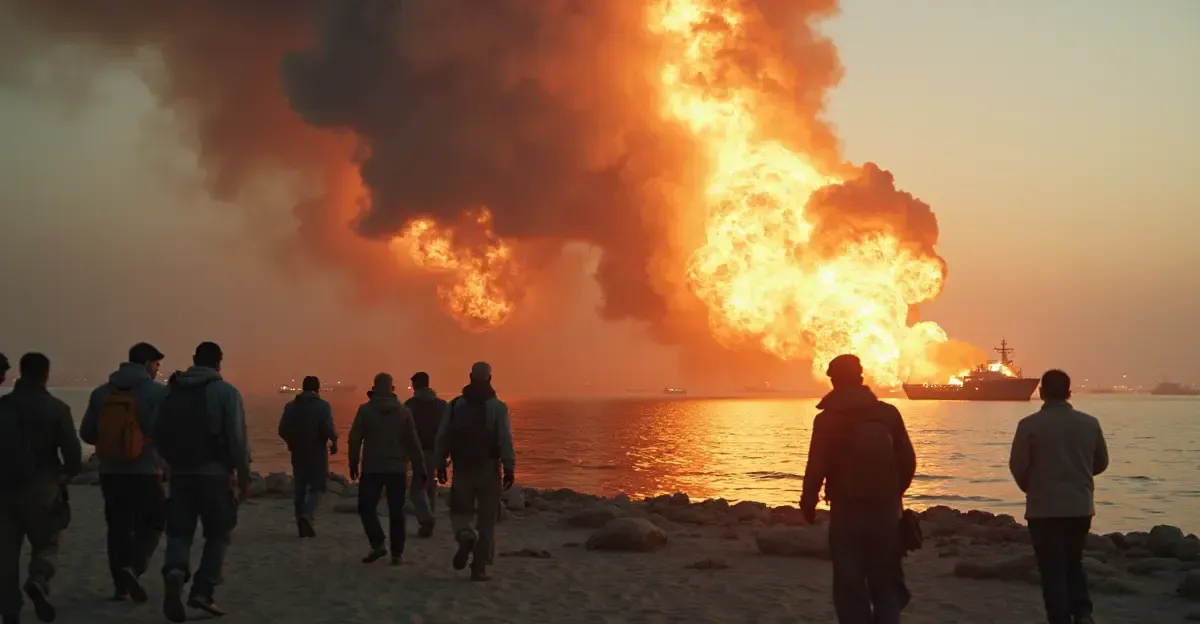
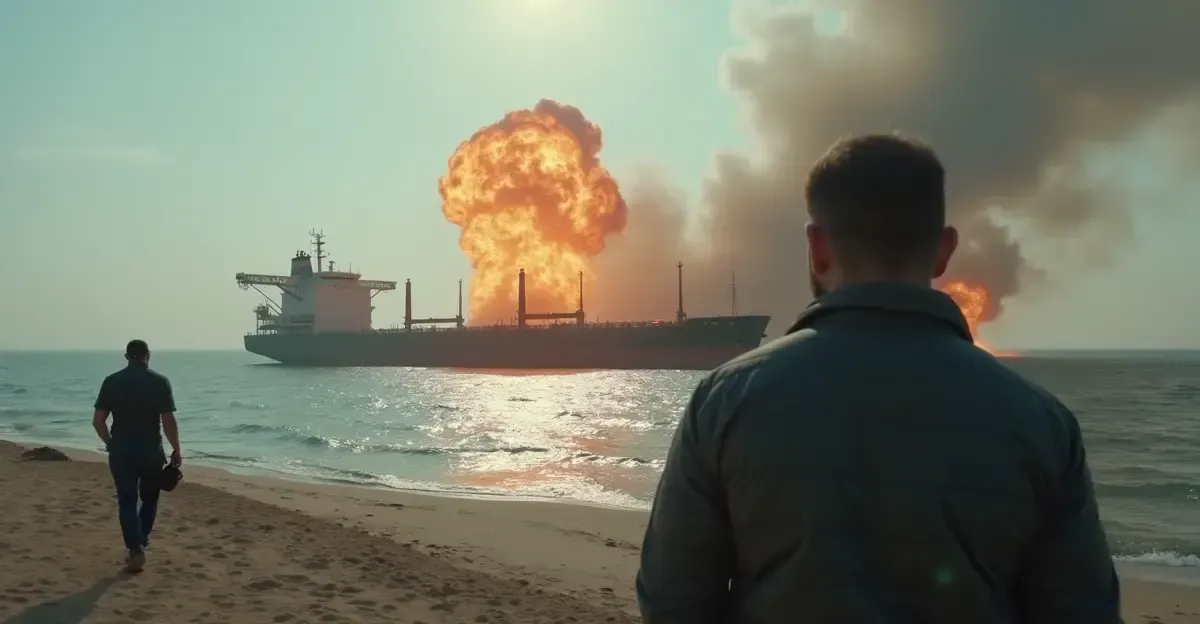
On July 7, 2026, Iranian forces struck three commercial vessels near the Strait of Hormuz, including the Qatari-flagged LNG tanker Al-Rakiyat and the Saudi crude supertanker Wedyan, in Omani territorial waters. The attacks occurred during Iran's funeral for slain Supreme Leader Ayatollah Ali Khamenei and hours before a US-NATO summit. Brent crude surged 5.6% to $76.04 per barrel. The UKMTO raised its threat level to 'Severe.'
The UN maritime agency, IMO, called for 'maximum restraint and de-escalation.' The strikes came just weeks after the Islamabad MoU ceasefire (June 14, 2026) ended the US-Israeli war on Iran. Iran's IRGC claimed the vessels violated Tehran-designated corridors. The attacks severely tested the fragile truce, with the US demanding guarantees on shipping safety and threatening renewed sanctions, as the leadership power vacuum emboldens hardline IRGC factions. The Strait of Hormuz shipping crisis continues to pose a direct threat to global energy security.
Gaza: Two Years On, Bodies Still Buried Under Rubble
Two years after the Israel-Hamas war, search and recovery operations continue in Gaza as civil defense teams work to find remains of thousands still buried under rubble. The UN reports over 71,000 Palestinians were killed and more than 171,000 injured. Severe shortages of heavy equipment, fuel, and the risks of unexploded ordnance hamper efforts. In one Gaza City neighborhood, teams have recovered only 13 of 44 believed victims from a single building.
Ramez Nabhan, who lost his wife and three children, described the ongoing ordeal: 'Waiting to recover remains and then bury them.' Natural decomposition and limited forensic capabilities make identification increasingly difficult, prolonging families' suffering as they search for closure. Months after the October 2025 ceasefire deal, over 1,059 people have been killed by Israeli attacks since the deal was signed, and nearly 1.9 million people remain displaced. Rebuilding Gaza would cost an estimated $71.4 billion, according to the UN. The humanitarian crisis in Gaza remains one of the most severe in the world.
Iran Nuclear Programme: UN Warns of 'Lost Continuity of Knowledge'
The UN Security Council heard a briefing on July 10, 2026 from Rosemary DiCarlo, the UN peace affairs chief, warning that there has been a 'lost continuity of knowledge' regarding Iran's nuclear programme since the US and Israel launched attacks on Iran in late February. This knowledge gap was highlighted amid rising tensions and new strikes across the Middle East. The UN atomic energy agency welcomed an initial Iran-US memorandum in June 2026 aimed at ending the war, with proposals to assist in verifying Iran's nuclear programme – a key sticking point in the negotiations.
The Security Council briefing underscored the fragility of the post-war environment and the challenges of re-establishing international monitoring capabilities. The Iran nuclear deal negotiations face significant hurdles as both sides remain deeply divided.
Humanitarian and Climate Developments
Rohingya Refugees: Monsoon Landslides and Funding Questions
Landslides and flooding triggered by heavy monsoon rains swept through the world's most densely populated concentration of refugee camps in Cox's Bazar, Bangladesh, killing at least 14 Rohingya refugees, most of them women and girls. A new investigation asks where billion-dollar funding for Rohingya refugees has gone, as the 2025-26 Joint Response Plan requires $710.5 million to assist 1.6 million people.
UNESCO Urges Debt-for-Education Swaps
UNESCO has urged governments and international lenders to expand debt-for-education swaps, warning that 113 countries, home to 6.1 billion people, now spend more on debt servicing than on educating their populations. In low-income countries, debt payments are nearly four times higher than education spending. Global aid to education could fall by 30% between 2023 and 2027, with education's share of development assistance dropping to 7.5% in 2024 — the lowest in two decades.
AI Adoption Gaps in Asian Trade
A new joint study by UN ESCAP and the Asian Development Bank finds that artificial intelligence deployment in trade facilitation across Asia and the Pacific remains below 15% among surveyed economies, ranging from 1% to 40% across subregions. East Asia leads in AI readiness while Pacific economies face the largest challenges. Key barriers include shortages in AI-related skills, high infrastructure costs, fragmented data systems, and regulatory uncertainty.
South Sudan: First Drought Anticipatory Action Plan
The UN World Food Programme (WFP), in partnership with the Government of South Sudan, activated the country's first-ever drought anticipatory action plan to protect over 65,000 people in Budi and Kapoeta North counties. By combining scientific weather forecasts, early warning systems, and pre-arranged financing, WFP aims to strengthen community resilience and reduce the humanitarian and economic impacts of climate-related drought.
Thai Youth Leaders Call for Inclusion and Climate Action
Nearly 400 young leaders from Thailand gathered for a national dialogue marking 80 years of Thailand's UN membership, focusing on inclusion, partnership, and implementing the Pact for the Future. Youth panellists called for co-designing policies with young people, recognizing indigenous young women's barriers, addressing technology's role in disability inclusion, and supporting youth wellbeing to sustain long-term civic engagement.
FAQ
What caused the renewed attacks in the Strait of Hormuz?
Iranian forces struck commercial vessels on July 7, 2026, claiming they violated Tehran-designated corridors. The attacks occurred amid a leadership power vacuum following the death of Supreme Leader Ayatollah Ali Khamenei and tested the fragile ceasefire that ended the US-Israeli war on Iran.
How many bodies are still under rubble in Gaza?
The UN reports that thousands of bodies remain trapped under rubble across Gaza. Over 71,000 Palestinians were killed in the war, and recovery operations are severely hampered by shortages of heavy equipment, fuel, and unexploded ordnance.
What is the status of Iran's nuclear programme?
The UN Security Council has warned of a 'lost continuity of knowledge' regarding Iran's nuclear programme since US-Israeli attacks in February 2026. A June 2026 memorandum between Iran and the US aims to end the war and allow verification, but negotiations remain difficult.
How much would it cost to rebuild Gaza?
According to the UN, rebuilding Gaza would cost an estimated $71.4 billion. Nearly 1.9 million people remain displaced, and the humanitarian situation remains catastrophic.
What are debt-for-education swaps?
Debt-for-education swaps allow heavily indebted countries to refinance expensive debt and redirect savings into education spending. UNESCO is promoting this mechanism as 113 countries now spend more on debt servicing than on educating their populations.
Sources
UN News, Global Issues, CNN, IPS, UNESCO, WFP, ESCAP/ADB, informedclearly.com


Follow Discussion